A once-in-a-lifetime experience: Rhulani guests support Rhino conservation in Madikwe
At Rhulani Safari Lodge, conservation is not a concept discussed in theory—it is a living, breathing commitment that unfolds on the ground, thanks in large part to the support of our guests. A recent rhino conservation activity in Madikwe Game Reserve is a perfect example of how meaningful guest contributions directly protect endangered wildlife for generations to come.
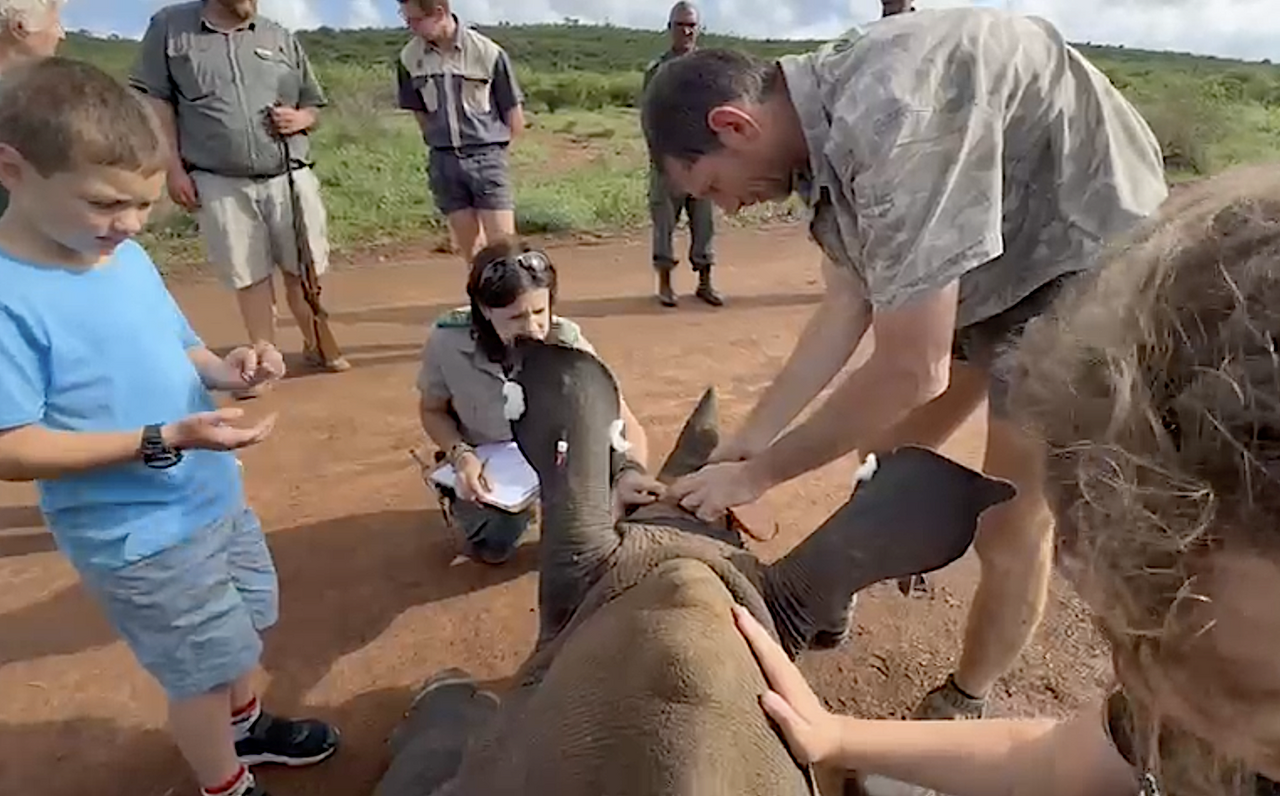
During their stay at Rhulani, the Lawson family—parents, grandmother, and their three children—embarked on an unforgettable journey that combined extraordinary safari experiences with hands-on conservation involvement. Guided throughout their stay by ranger Ralf, the family enjoyed several game drives showcasing the beauty of the reserve: vast landscapes bathed in golden light, breathtaking sunsets, and memorable wildlife encounters.
The morning of Monday, 15 December began as a typical safari morning, departing at first light. As the sun rose on the horizon, the family was rewarded with a remarkable sight: a lively clan of nine spotted hyenas playing near the airstrip—an exciting start to a very special day.
However, this morning was destined to be more than just a game drive. The Lawsons were about to take part in a once-in-a-lifetime expedition—an essential conservation operation focused on the protection of one of Africa’s most endangered species: the rhinoceros.
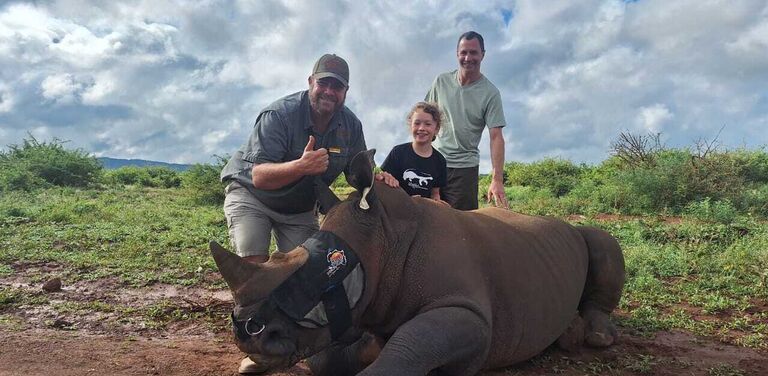
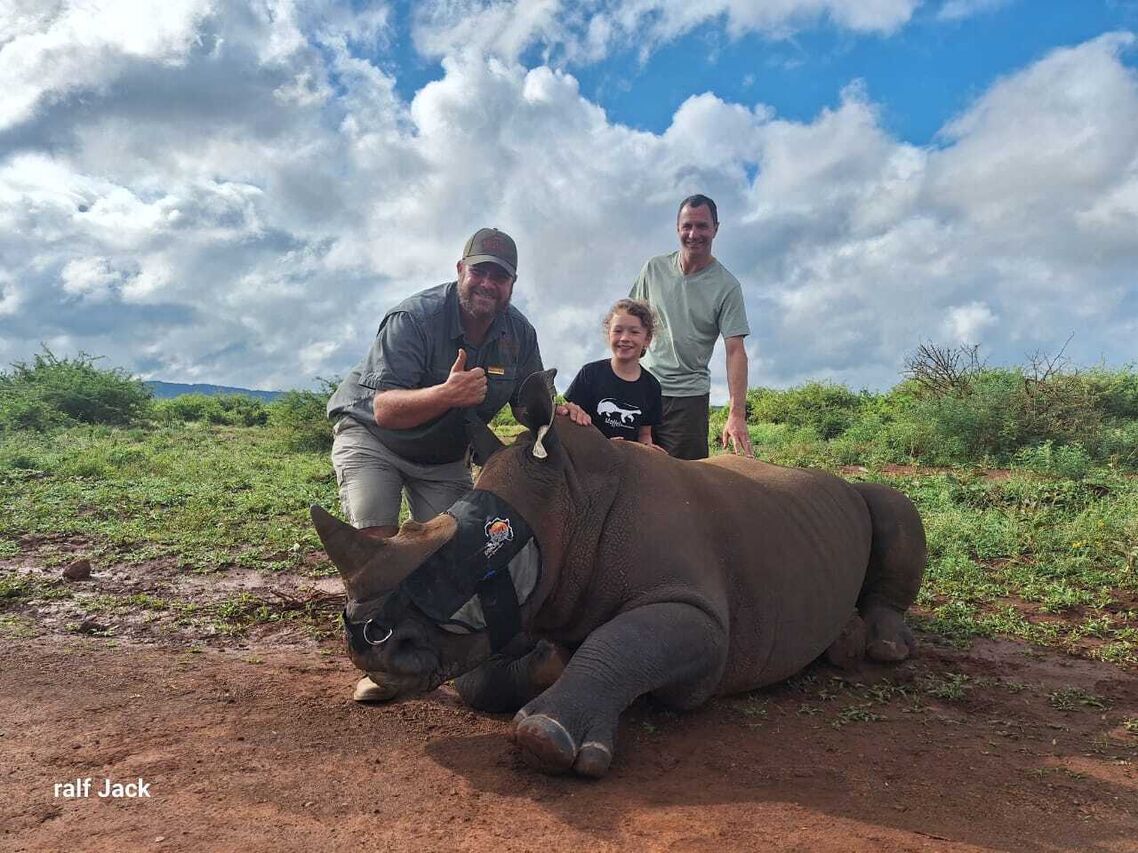
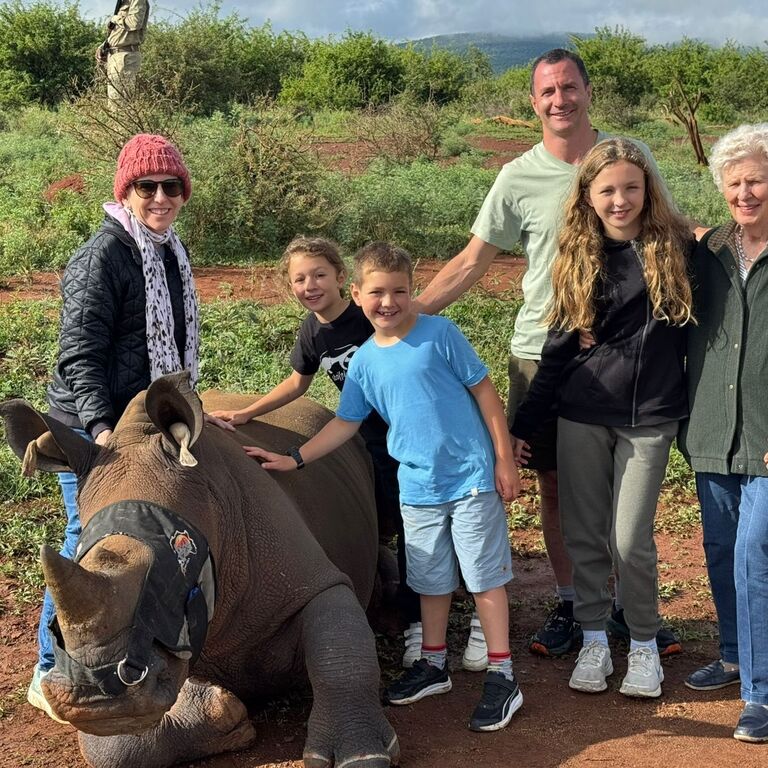
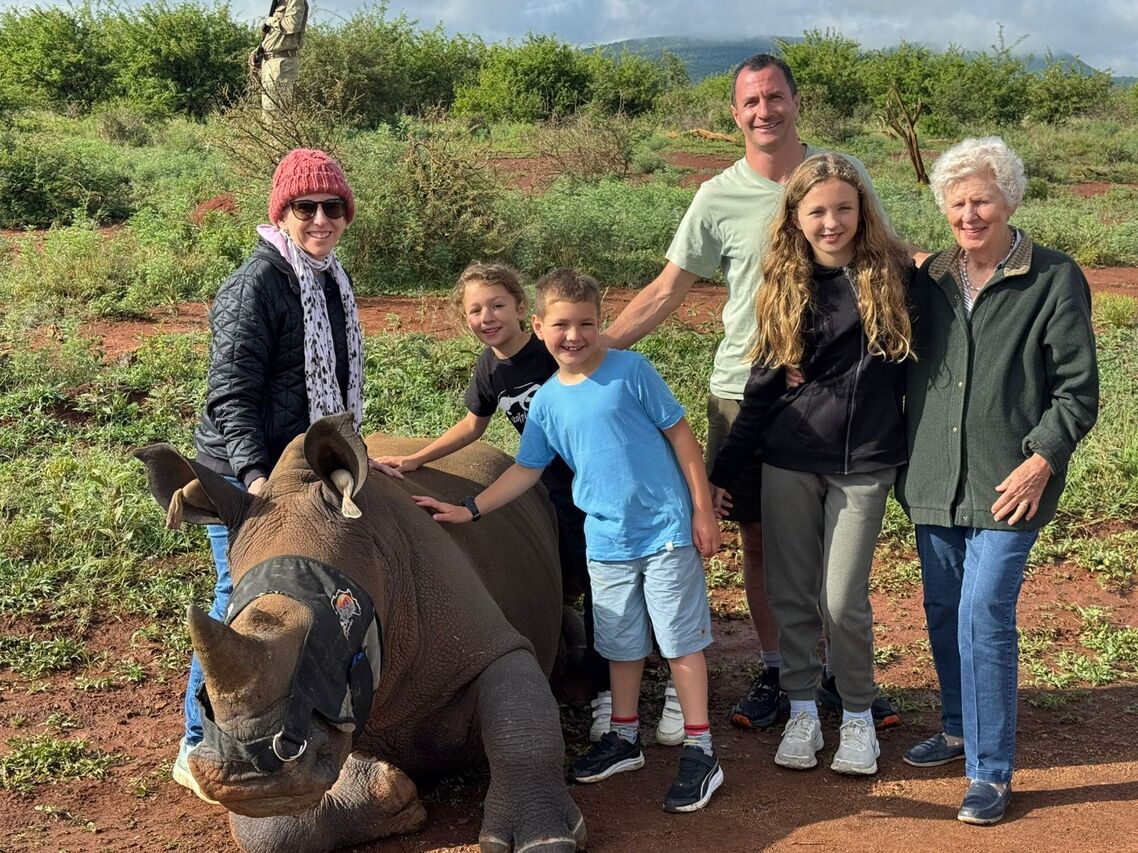
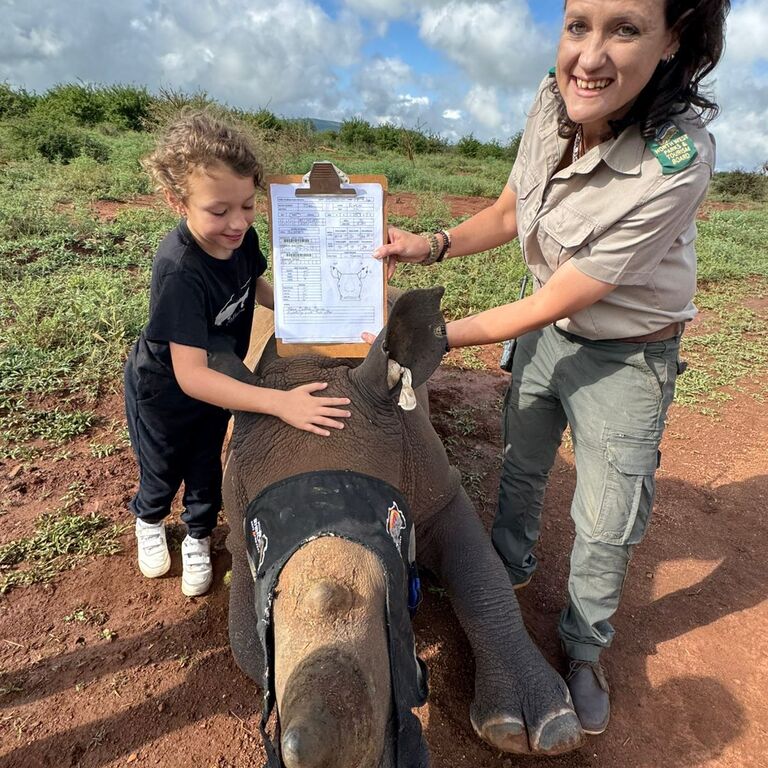
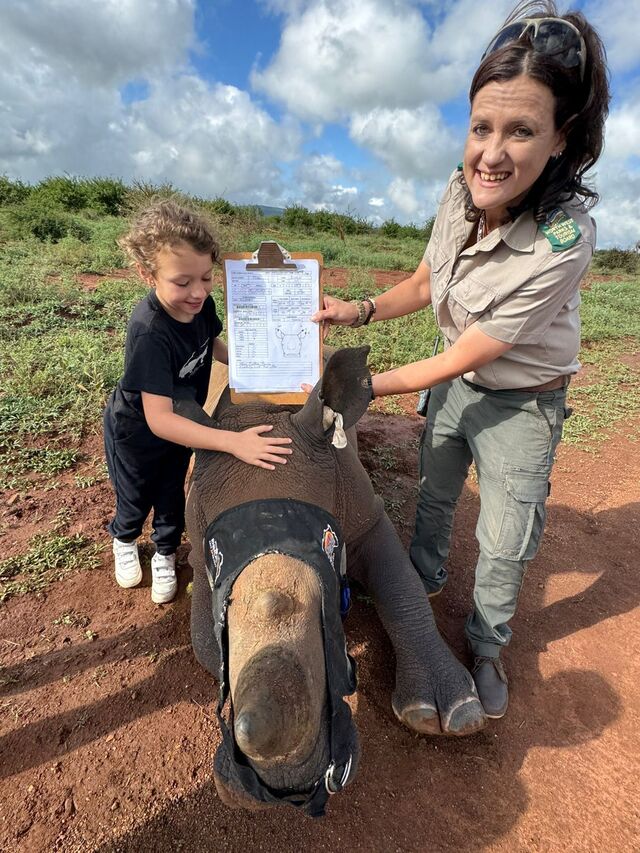
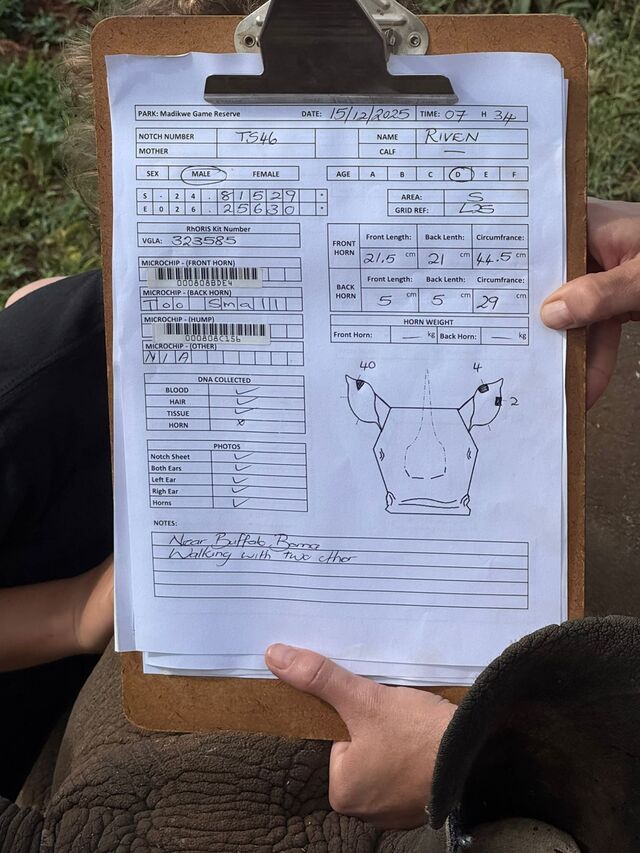
Thanks to intensive and effective conservation measures, rhinos in Madikwe Game Reserve are able to live peacefully and, unlike in many other South African reserves, can still keep their horns. These horns are not only a defining feature for photographers capturing the prehistoric beauty of these animals; they are vital for the rhino’s defence and social interactions within their environment.
Upon arrival at the meeting point, ranger Ralf and the family joined Elzane, the park’s ecologist, and Gerardes, the reserve veterinarian. The team had already prepared all the necessary equipment and medication. A detailed briefing followed, explaining the darting process, the medicines used, and the vital importance of the procedure for rhino monitoring and protection.
Shortly thereafter, the helicopter lifted off with the veterinarian on board to locate a suitable animal for notching. Within just ten minutes, a beautiful sub-adult male white rhino was identified. Once safely darted and lying calmly on the ground, his eyes and ears were gently covered to minimise stress.
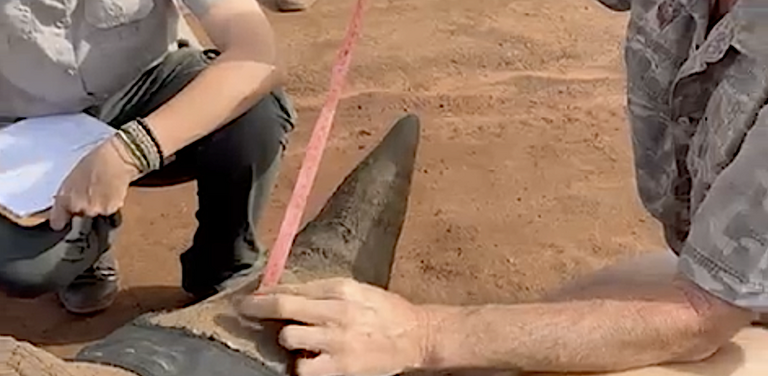
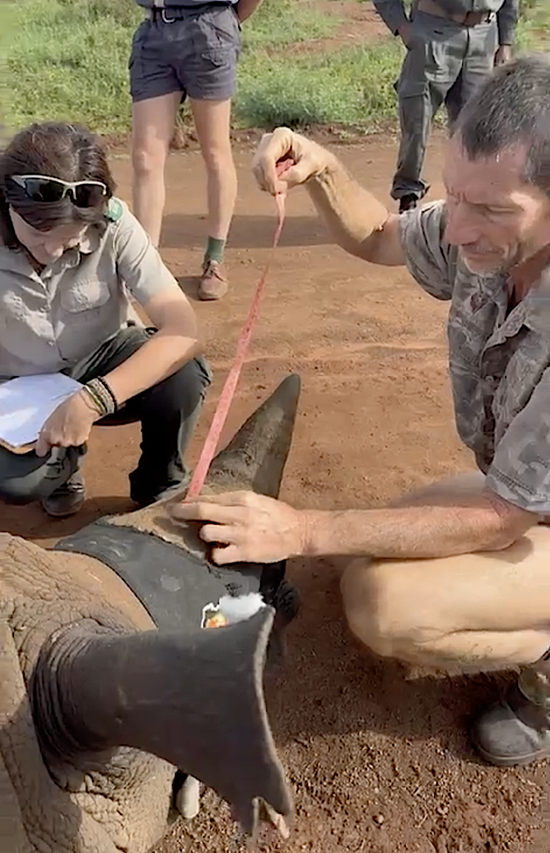
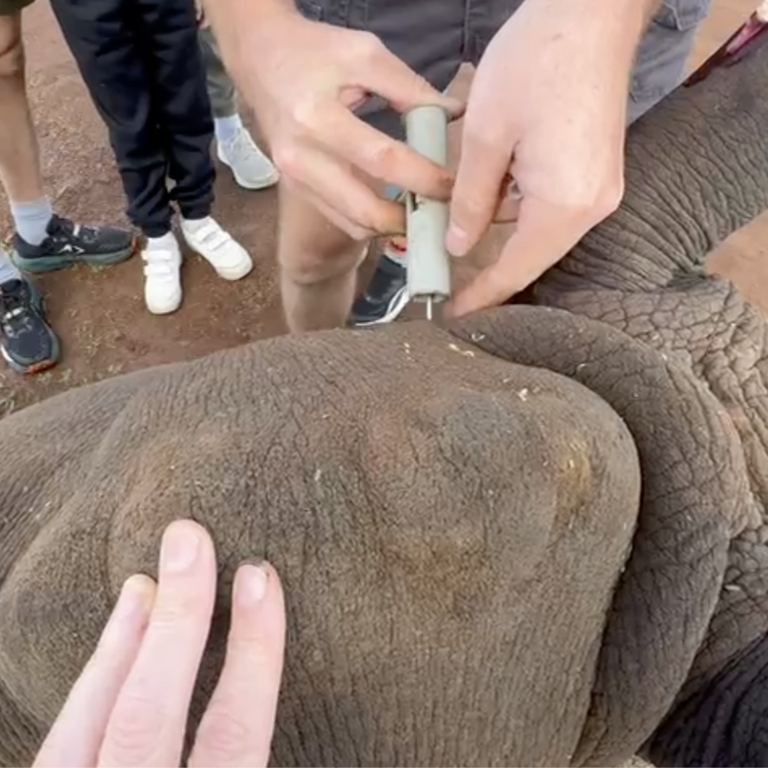
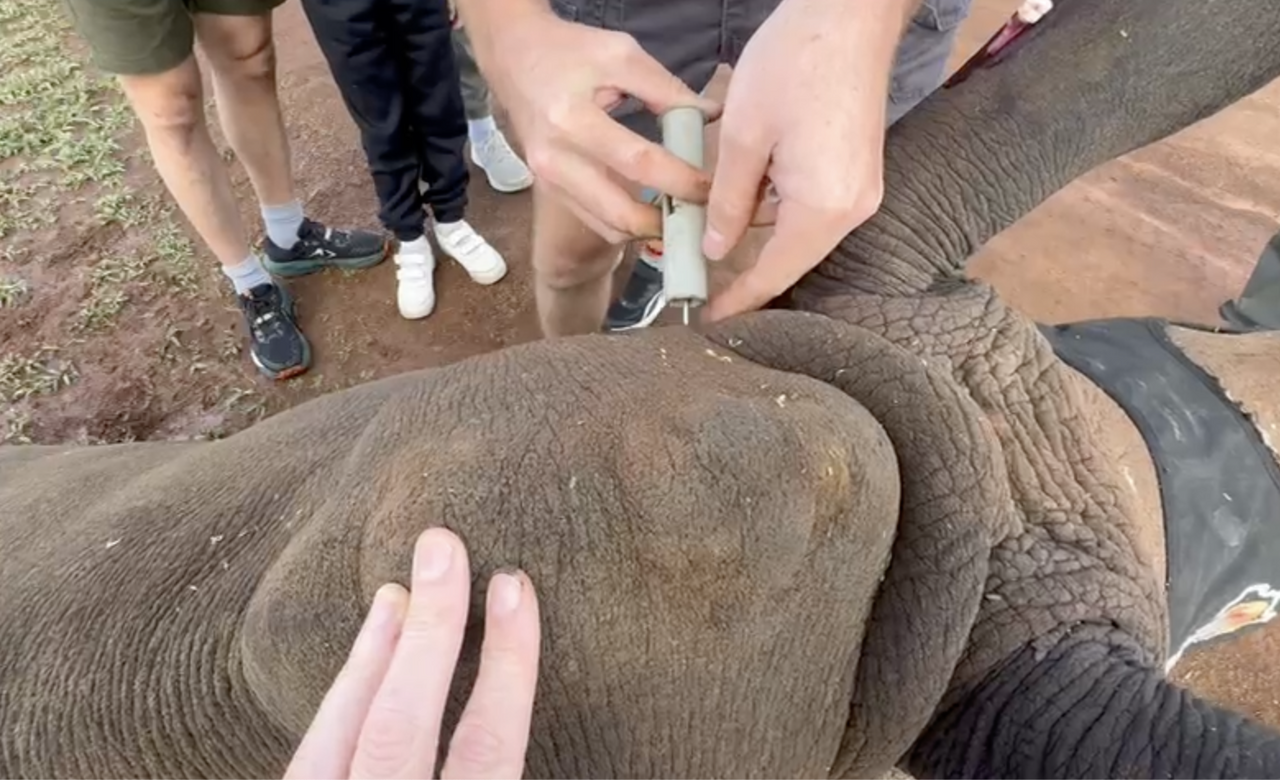
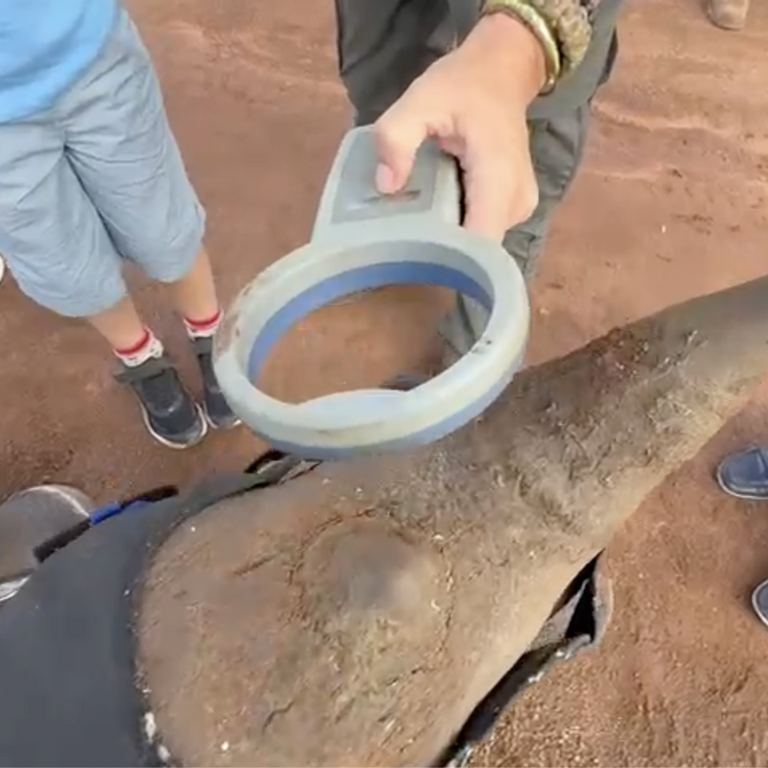
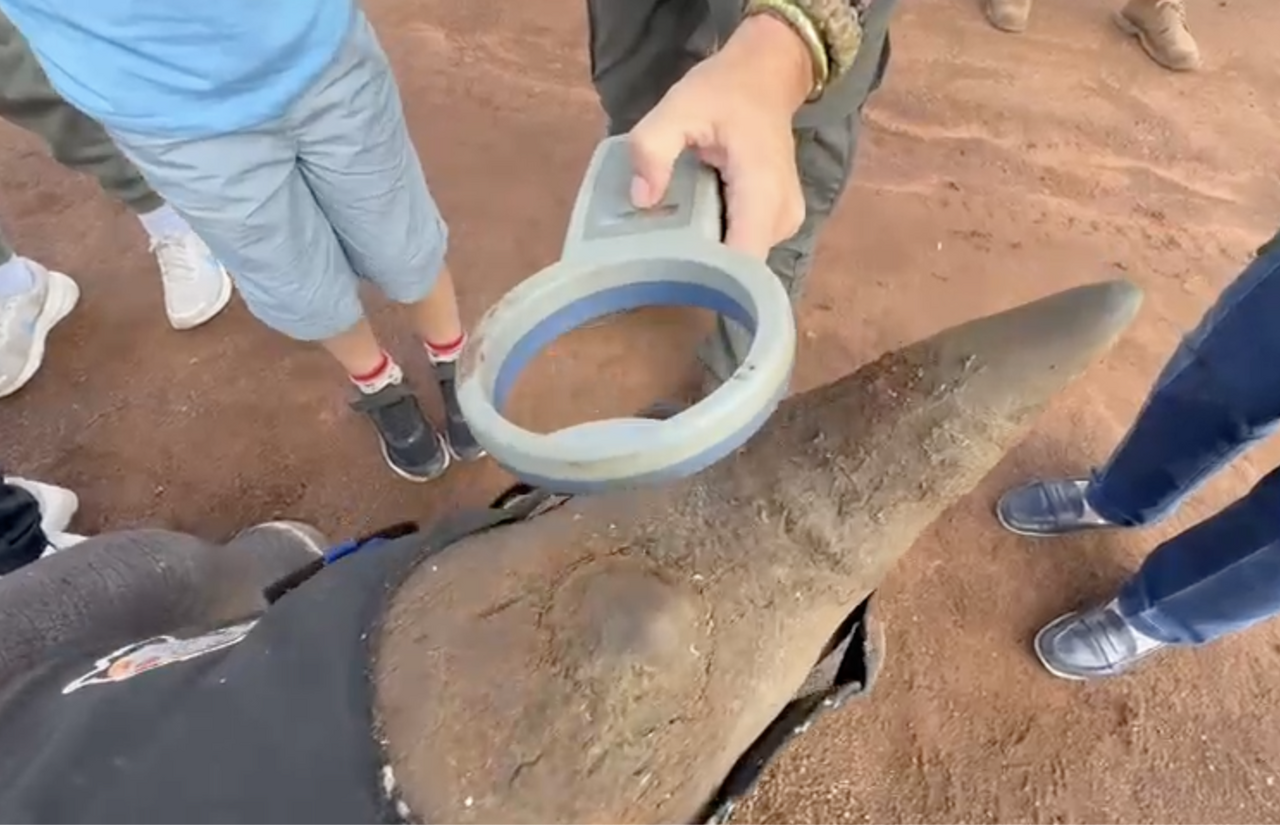
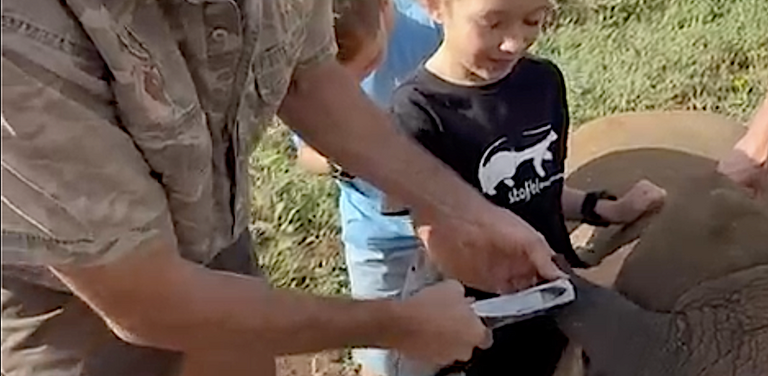
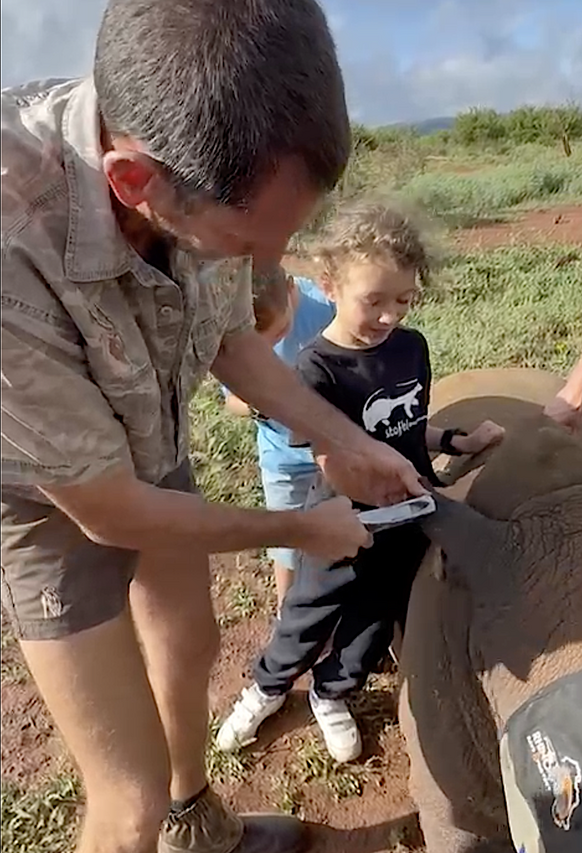
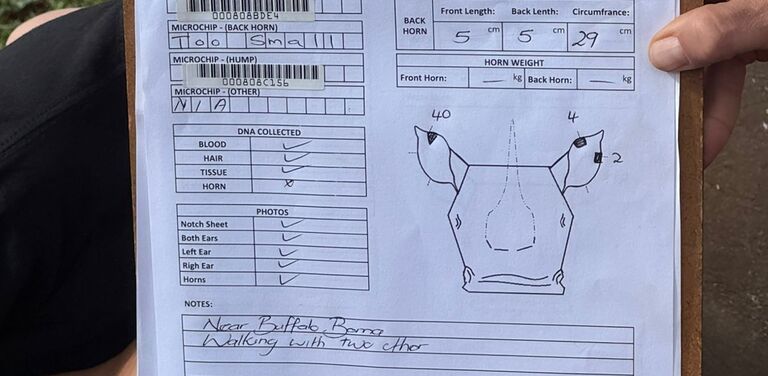
This was the moment when the Lawson family was invited to step forward and actively assist in the process. Under the guidance of the veterinary team, they helped with health checks, blood and horn samples, measurements, and data recording. They also had the rare opportunity to touch this extraordinary animal—discovering just how soft the rhino’s wide lips truly are.
The most critical steps of the operation followed: the implantation of a tracking transmitter in the rhino’s hump, the insertion of a microchip into the horn, and the notching of the ears. These measures ensure rapid identification and tracking, and crucially, allow authorities to identify the horn should the unlikely but ever-present threat of poaching occur.
The Lawson family chose to name the young rhino “Riven.” After the procedure was completed, the reversal medication was administered, and everyone watched as Riven steadily rose to his feet and moved off safely—clear proof that he had successfully undergone this vital intervention, setting him on the path to a long, secure, and healthy life in Madikwe.
We extend our heartfelt thanks to the Lawson family for their generosity, commitment, and passion for conservation. Their support brings Rhulani’s conservation vision to life and plays a direct role in safeguarding Africa’s wildlife. Experiences like these remind us that conservation succeeds best when people are given the opportunity to connect, participate, and protect.
Related articles

A global distinction, earned every day: Rhulani's 13th consecutive victory
| Rhulani Safari LodgeSome achievements become even more meaningful with every passing year. On Saturday evening, 17 October, Rhulani Safari Lodge once again reached an extraordinary milestone, receiving the prestigious ti...Rhulani Safari Lodge joins South Africa’s portuguese business community for a glamorous SAPCC gala evening
| Rhulani Safari LodgeAn evening of celebration, meaningful connections and business networking brought Rhulani’s owners and management together with one of South Africa’s vibrant business communities.On Saturday, 10 Octob...Excellence behind every meal: Rhulani renews HACCP certification
| Rhulani Safari LodgeAt Rhulani Safari Lodge, a truly exceptional safari experience is about much more than what happens out in the bush. It is also about the care, attention and professionalism behind every detail of you...Wild dogs in the backyard – An unexpected afternoon at Rhulani
| Rhulani Safari LodgeIt was one of those beautiful late afternoons at Rhulani Safari Lodge when the bush seemed to slow down. The guests were all out on their afternoon game drives, the lodge was wonderfully quiet, and th...Rhulani Insights 286 – Brand-new safari vehicles
| Rhulani Safari LodgeAt Rhulani Safari Lodge, every detail of your safari experience matters. In our latest video, owner Rolf Steiner and Assistant Manager Willem proudly present the newest additions to our fleet: brand-n...Rhulani Insights 285 - Solar plant extension
| Rhulani Safari LodgeSustainability is an ongoing journey at Rhulani Safari Lodge, and in our latest video, owner Rolf Steiner joins Lodge Manager Tom-Hendrik Basson for an exclusive tour of our expanded solar installatio...